


Bone Health in Your 40s: What's Already Changing and What Still Matters Most


Most women start thinking about bone health somewhere in their 60s. After a scan result. After a mother's hip fracture. After a doctor mentions osteoporosis for the first time.
The changes that matter most start earlier than that. Quite a bit earlier.
During perimenopause, which for many women begins in their early to mid-40s, oestrogen levels start to shift. Oestrogen is one of the primary regulators of bone density. As it fluctuates and gradually falls, bone breakdown begins to outpace bone rebuilding. This can happen while periods are still regular, while you feel broadly well, and long before any scan gives cause for concern.
Almost one in five Irish adults aged 40 to 54 have already sustained a fragility fracture. Most people expect that figure to belong to a much older cohort.
If you are in your 40s, this decade is not too early to be thinking about bone health. For most women, it is the most important one.
Your bones are not fixed
Bone density begins to decline during perimenopause, before periods stop and before any scan would flag a problem.
Bone is living tissue. Throughout life, two types of cells are constantly at work: osteoblasts build new bone, and osteoclasts break down older bone. During childhood and early adulthood, building tends to win. Peak bone mass is typically reached by the late twenties, which is why the habits of your teens and twenties quietly shape the bones you carry into midlife.
From the mid-30s, the balance starts to shift. Once menopause begins, women lose on average 1 to 2% of bone density per year, and sometimes as much as 3 to 5% per year. The process begins before that, during perimenopause, as oestrogen starts to fall.
Bone loss during perimenopause erodes what you have already built. The more density you are carrying into this decade, and the more you do to protect it now, the more you have to work with in the years that follow. Waiting until after menopause, or until a DXA scan flags something, is not wrong. It means starting with less.
The bones you have at 50 are largely shaped by what you did in your 40s.
For some women, HRT is part of this conversation too. Oestrogen replacement during perimenopause has been shown to slow bone loss, and bone protection is one of the recognised benefits of HRT when it is appropriate and well-managed. If you are considering HRT or already taking it, it is worth discussing bone health specifically with your GP or specialist as part of that review. The nutrition and lifestyle factors in this post remain relevant alongside it.

Does calcium protect your bones? Yes. But it cannot do it alone.
Calcium matters for bone health. It cannot do its job, though, without several key co-factors working alongside it.
Vitamin D is needed to absorb and use calcium properly. Without adequate vitamin D, even a calcium-rich diet falls short. In Ireland, vitamin D deficiency is common across all age groups, particularly through autumn and winter when sunlight is not strong enough to trigger synthesis in the skin. The Food Safety Authority of Ireland recommends a daily vitamin D supplement of 15 micrograms for all adults. I usually recommend Better You Vitamin D Daily Oral Spray to clients, for both them and their family. It is available over the counter in any chemist and is one of the most straightforward things you can do for bone health year-round.
Magnesium plays a role in how the body activates and uses vitamin D, and most Irish adults fall short of recommended intakes through diet alone. Vitamin K2, found in fermented foods, egg yolks, and some cheeses, helps direct calcium into bone rather than into soft tissue. Zinc supports the bone-building cells directly.
And then there is protein. Protein provides the structural framework that bone is built on and supports calcium absorption in the gut. Research consistently links higher protein intake with better bone density in women during and after perimenopause. Yet protein is one of the most commonly under-eaten nutrients in this age group. Women in their 40s and 50s who are watching their weight often eat less protein than their bones need, at exactly the time their bodies require more.
Bone responds to the whole dietary picture, accumulated over years. A calcium supplement taken in isolation is a starting point, not a strategy.
What about women who do not eat dairy?
Women can meet their calcium needs without dairy, but it takes consistent planning across the full day.
A lot of women in their 40s are avoiding dairy, and not because they are intolerant. Concerns about cholesterol, saturated fat, and weight gain have moved dairy off the menu for many people who are otherwise eating carefully and with good intentions. These are not unreasonable concerns. But swapping out dairy without a clear plan for what replaces it is one of the more common gaps in bone nutrition.
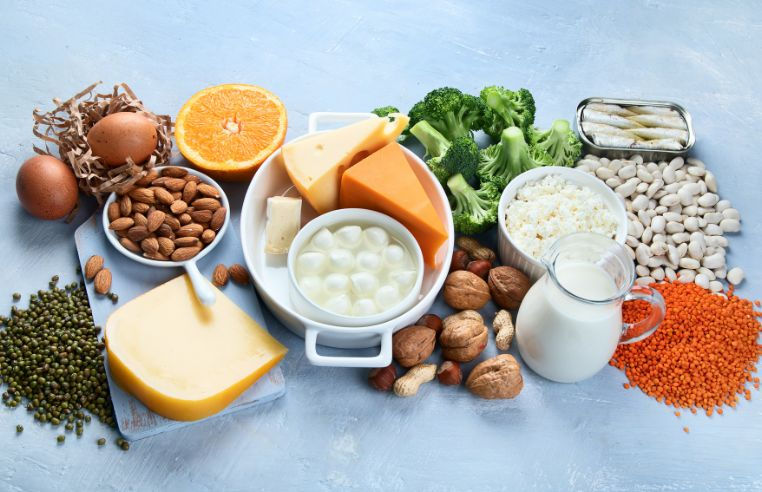
Non-dairy calcium sources include cannellini and other white beans, broccoli, oranges and dried fruit. The soft bones in tinned fish also contain calcium if you don't mind eating them. What matters is that these foods are showing up consistently across the day, not occasionally. Without dairy as an anchor, getting to adequate intake requires more thought and more intention. It is entirely possible. It just does not happen by default.

Does walking protect your bones?
Walking supports bone health but is not sufficient on its own. Bone needs resistance and load to maintain and rebuild itself.
Bone responds to force. The stimulus that drives bone remodelling comes from resistance and impact, not from sustained low-intensity movement. Resistance training, whether with weights, bands, or bodyweight, gives bone the signal to maintain and rebuild. From a bone health perspective, doing five cardio sessions a week with little to no resistance work is worth reconsidering.
Muscle matters here too. Stronger muscles protect bone directly, partly by reducing the likelihood and impact of falls. Many fractures happen not because bones are weak in isolation, but because a fall occurred. Falls are far less likely in someone with good muscle mass, balance, and coordination.
The activities most protective over time are those that challenge all three: strength, balance, and coordination. Resistance training, yoga, Pilates, and hiking on uneven terrain all qualify.
The goal is not a number on a future scan. It is being strong enough to carry the shopping, travel without worry, and move confidently into your 60s, 70s, and beyond.
What else can affect bone health that most women do not know about?
Three factors come up regularly in clinic that affect bone health in ways that are easy to miss.
Long-term PPI use
Proton pump inhibitors, including omeprazole and lansoprazole, prescribed for acid reflux, are one of the most commonly prescribed groups of drugs in Ireland. Research from Irish general practices has found they account for roughly one in five prescriptions, with the majority of patients on long-term therapy. They are appropriate and important when indicated. Stomach acid plays a role in absorbing calcium and magnesium, and long-term PPI use has been associated in research with reduced absorption of both. If you have been on a PPI for a prolonged period, bone health is worth raising with your GP as part of that conversation.
Coeliac disease and digestive conditions
Untreated or poorly managed coeliac disease can significantly impair absorption of calcium, vitamin D, and magnesium. In some people, reduced bone density is one of the earliest signs that something is wrong, appearing before any obvious digestive symptoms. Other conditions affecting gut lining integrity, including inflammatory bowel disease and chronic digestive issues, can have similar long-term effects on mineral absorption.
A long history of restrictive eating
Bone tissue needs a continuous supply of protein, calcium, and calories to maintain itself. When intake is consistently low over months and years, the body has less to work with. Years of low-calorie dieting, cutting out food groups, or chronic under-fuelling all carry a cost that rarely gets discussed. In clinic, women often arrive without knowing that long stretches of restriction may have left a mark on their bones. Adequate protein and calorie intake over time are foundational to bone health, not optional.

Bone health in your 40s should be seen as an investment
The best time to build bone density is before you have reason to worry about it.
Bone health tends to come up in one of two ways: after a difficult diagnosis, or not at all. For most women, the conversation starts too late.
The habits that protect bone density are not complicated. Eating enough protein. Including calcium-rich foods consistently across the day. Taking a daily vitamin D supplement. Adding resistance exercise alongside any cardio. Looking after gut health. Being aware of anything in your health picture that might quietly affect mineral absorption.
None of this needs to happen all at once. Starting in your 40s, even with one or two changes, gives your bones more to work with over the years ahead. The goal is not a perfect scan result. It is staying strong, mobile, and independent enough to do the things you want to do, for longer.
The women who arrive at that point in good shape are, more often than not, the ones who started thinking about it before they felt they had to.
Want more like this?
Practical, clinical content on nutrition and health, straight to your inbox. No fads, no noise. Just the kind of information that helps you make decisions.
Further reading
These pieces offer useful context alongside the information in this post:
Lifting the Lid on Perimenopause Bone loss is one of several things that shifts during perimenopause. This piece covers the broader hormonal picture, including what's happening and why the 40s matter more than most women realise.
Protein Hype vs Protein Truth: What You Actually Need Protein came up in the bone health piece for a reason. This post cuts through the marketing noise and gets into how much you actually need and how to get there without overthinking it.
Managing Cholesterol Through Food A lot of women in their 40s are avoiding dairy over cholesterol and saturated fat concerns. If that's you, this piece is worth a read before making a decision either way.
Acid Reflux Relief: What I'd Do for Lasting Heartburn Help The PPI section in this post touched on how acid-suppressing medication can affect mineral absorption over time. This piece looks at the reflux picture, including what's driving it and what might be worth addressing at the root.
Nutrition Advice for Perimenopause A wider look at how nutrition needs shift during the perimenopause transition, covering energy, hormones, and the practical changes worth making. Bone health is one piece of that puzzle.
Not sure if you're hitting your daily calcium target? The International Osteoporosis Foundation has a simple calculator that takes less than two minutes. Check it here.


Comments