


Why Is My PMS Getting Worse? Hormone Changes in Perimenopause Explained


Many women find themselves searching the same question late at night: why is my PMS getting worse? For most, the answer is perimenopause, even when periods are still regular and that word feels far off.
For years the cycle felt predictable. Then, somewhere in the late thirties or early forties, the two weeks before a period start to feel like a different country. Mood drops. Sleep breaks. The bloating arrives uninvited. Energy falls off a cliff.
A client I worked with recently described it well. She felt fine from the day her period started right through to ovulation. Clear-headed, energetic, herself. Then something shifted. Within a day or two of ovulation, the fatigue would creep in, her digestion would go haywire, and by the week before her period she was barely functioning.
"I just need my period to start," she said. "That's when I feel normal again."
That pattern, good first half, difficult second half, is one of the most common things I hear from women in perimenopause.
Can PMS Get Worse in Your 40s?
Yes. It is one of the most common signs that perimenopause has begun, even when periods are still regular.
As ovulation becomes less consistent, progesterone levels fall and oestrogen fluctuates more widely. This makes the two weeks before a period significantly harder to get through.
Why Some Women Only Feel Good for Half Their Cycle
The menstrual cycle has two distinct phases.
The first half, from the start of a period to ovulation, is the follicular phase. For many women this feels like the easier stretch. Energy is steadier, thinking clearer, mood more stable.
After ovulation comes the luteal phase, the two weeks leading up to the next period. This is when progesterone normally rises. In a well-functioning cycle, progesterone has a calming, stabilising effect that supports sleep, mood and the nervous system.
During perimenopause, ovulation becomes less consistent. When ovulation is irregular, progesterone production falls short. When progesterone dips while oestrogen continues to fluctuate, sometimes dramatically high and sometimes unpredictably low, the second half of the cycle can feel very different from how it used to.
Women in online communities for perimenopause describe this phase with striking consistency. Phrases like "luteal hell," "everything falls apart after ovulation," and "I just need my period to start so I feel normal again" appear again and again. Some say they get one good week a month, if that.

Why PMS Can Start Getting Worse in Perimenopause
For many women it is more common than most realise.
PMS that once lasted two or three days can expand to fill ten or fourteen days during perimenopause. Women who never had significant PMS before sometimes find it becomes intense for the first time.
Perimenopause can begin in the late thirties, even while periods are still regular and cycle length has not changed.
The experiences I hear in clinic reflect this:
"My PMS used to last a couple of days. Now it feels like two weeks."
"I never really had it before. Now it's brutal."
"I feel like I'm in PMS half the month."
These are not unusual complaints. They reflect a real hormonal shift that deserves to be taken seriously.
Changes in Your Cycle You Might Notice in Perimenopause
Alongside worsening PMS, the cycle itself often begins to change.
Cycles may shorten. A woman who always had a 28-day cycle might find it dropping to 24 or 25 days. Periods can become heavier. Spotting between periods may appear. Some months the timing becomes unpredictable.
Heavier periods are worth paying attention to beyond the inconvenience. Significant blood loss month after month can pull iron levels down, and low iron compounds the fatigue that is already a feature of the luteal phase.
I see this regularly in clinic. A client comes in exhausted and assumes it is purely hormonal. When we look at her blood results, her ferritin is extremely low.
The standard advice is to supplement with iron, which is correct. However, iron supplements can cause constipation, and constipation worsens the bloating that is already driving many women mad in the luteal phase. One issue ends up sitting on top of another, which is part of why the whole picture can feel so stuck.
What Does Worsening PMS Feel Like?
The most commonly reported pattern is a noticeable shift after ovulation. Fatigue, brain fog, bloating, irritability and disrupted sleep can last ten days or more rather than the two or three days women were used to.
Some women describe it as losing half the month.
Brain Fog and Difficulty Concentrating
Many women notice a clear shift in their thinking during the days before their period. Words disappear mid-sentence. Concentration breaks down. Tasks that would normally be automatic suddenly feel effortful.
This is not imagined. It reflects a real neurological effect of hormonal fluctuation, particularly the drop in progesterone which normally supports cognitive function.
Anxiety, Irritability and Mood Swings
Small frustrations land differently. Emotional reactions feel disproportionate.
Some women describe feeling unusually tearful or overwhelmed in the days before their period. This does not mean something is wrong with them. It reflects a hormonal environment that has shifted.
Bloating, Constipation and Digestive Changes
The gut responds to hormonal fluctuations more than most people expect.
Bloating before a period, constipation, changes in bowel habits and abdominal discomfort are very common in the luteal phase and tend to worsen during perimenopause. For some women the bloating is significant enough to affect how clothes fit and how they feel physically throughout the day.
Menstrual Migraines
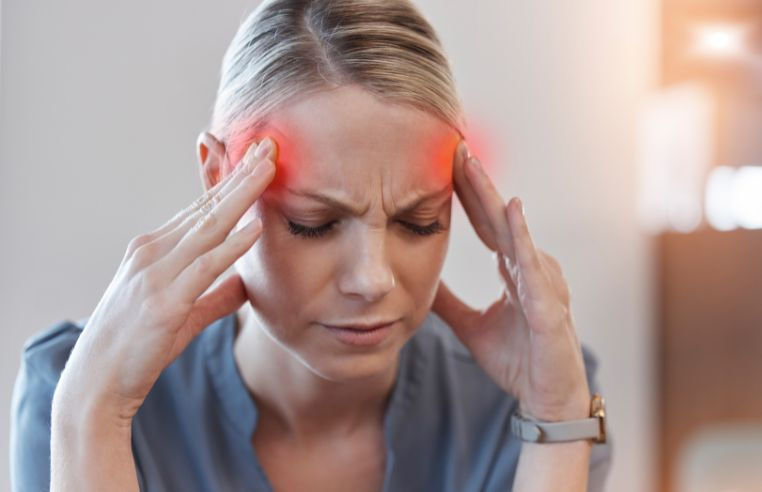
Hormonal migraines that follow a clear cycle pattern are something I see frequently.
One client came to me after losing several days each month to migraines that arrived like clockwork in the days before her period. After working on diet, specific nutrients and hormone balance, those migraines reduced substantially. She is no longer losing those days every month.
Migraines with a hormonal pattern are often one of the most responsive symptoms to nutritional and lifestyle work. This makes them worth addressing specifically rather than simply managing them when they appear.
What Is Actually Happening Hormonally?
In the reproductive years, oestrogen and progesterone follow a coordinated rhythm.
Oestrogen rises in the first half of the cycle. After ovulation, progesterone rises and balances it, stabilising mood, supporting sleep and helping regulate the nervous system.
During perimenopause that rhythm becomes less predictable. Oestrogen levels may spike very high in some cycles and drop sharply in others. Meanwhile progesterone tends to decline because ovulation becomes less reliable, and meaningful progesterone production depends on ovulation occurring properly.
When the balance between these hormones shifts so that oestrogen becomes relatively dominant and progesterone relatively low, symptoms such as mood swings, migraines, bloating and heavy periods often worsen.
In functional medicine this pattern is sometimes called oestrogen dominance. The term does not mean oestrogen is always excessively high. More often it describes a hormonal ratio that has shifted out of balance.
This also explains why symptoms can vary so much from cycle to cycle. One month migraines, the next anxiety, the next fatigue. Hormone levels during perimenopause are a moving target.

Why Blood Tests Can Show Normal Results Even When Symptoms Are Real
Many women visit their GP with these symptoms, have hormone blood tests, and are told everything looks normal.
This is genuinely confusing when you are losing two weeks of every month to symptoms that feel anything but normal.
The issue is that a single blood test captures only one moment in a cycle that is constantly shifting. During perimenopause those shifts become even more pronounced.
Reference ranges do not always reflect these fluctuations. A result that appears normal on day 5 of a cycle might tell a very different story on day 20.
Symptoms can be very real even when bloodwork appears normal. That does not mean the test is useless. It means the wider picture needs to be considered.
Some Women Are More Sensitive to Hormonal Changes
Hormones do not operate in isolation. Other systems influence how hormonal changes are felt and how well the body adapts to them.
Blood sugar regulation is one important factor. When blood sugar is unstable it can amplify hormonal symptoms.
Cortisol, the body's primary stress hormone, also interacts with reproductive hormones. Chronic stress can disrupt the hormonal rhythm and make the luteal phase more difficult.
Thyroid function plays a role as well. The gut microbiome influences how oestrogen is metabolised and cleared from the body.
This is why addressing hormone balance rarely involves looking at hormones alone. In clinic we look at digestion, blood sugar balance, stress, sleep and nutrient status. Each layer interacts with the others.
What Can Help
Perimenopausal hormonal changes are natural. Struggling through the second half of every cycle is not inevitable.
Several areas tend to make a meaningful difference:
Blood sugar stability through regular meals with adequate protein
Fibre and plant diversity to support oestrogen clearance through the gut
Supporting gut health so hormones are processed and eliminated effectively
Managing stress and improving sleep, both of which influence cortisol and reproductive hormones• Targeted nutritional support to address deficiencies such as low iron or magnesium that worsen symptoms
It is also important to understand that hormone symptoms rarely shift overnight. Progress tends to happen gradually. However, when the right areas are addressed, the improvements can be meaningful and long lasting.

When to Seek Support
It may be worth seeking professional support if:
PMS symptoms last for most of the cycle
Menstrual migraines affect work or daily life
Periods have become very heavy
Fatigue is persistent and not explained by poor sleep
Symptoms are affecting relationships or quality of life
Working with a nutritional therapist does not replace medical care. Several clients I work with are also under gynaecological care for conditions such as adenomyosis or PMDD. We work alongside that treatment by focusing on diet, lifestyle and supplements.
Hormone symptoms often have several contributing layers, and addressing them together tends to produce better results.
What Progress Actually Looks Like
When things begin to shift, the changes usually happen gradually.
Migraines become less frequent. The heavy, foggy days before a period reduce from ten days to five. Bloating eases. Energy in the second half of the cycle begins to return.
The goal is not to eliminate the luteal phase. The goal is to stop losing half the month to it.
Want practical guidance delivered to your inbox?
Each week I share practical, evidence-based guidance on hormones, gut health and nutrition. The kind of detail that rarely fits into a short GP appointment.
No fads. No overwhelm. Just clear information that helps you understand what is happening in your body and what you can do about it.
You might also find these articles useful
Embracing the Ebb and Flow: Nutrition Advice for Every Phase of Your Menstrual Cycle A practical guide to how energy, appetite and hormones shift across the menstrual cycle and how nutrition can support each phase.
Lifting the Lid on Perimenopause An overview of what actually happens during perimenopause, including the hormonal changes that drive many of the symptoms women experience in their 40s.
Hormonal Harmony: The Perimenopause Diet Essentials The key nutrition foundations that help support hormone balance, steady energy and better metabolic health during perimenopause.
Blood Pressure and Perimenopause Why blood pressure can begin to rise during midlife and the nutrition and lifestyle factors that help protect cardiovascular health.
Cholesterol, Hormones and Perimenopause How hormonal shifts in midlife can influence cholesterol levels and what you can do through diet and lifestyle to support heart health.
Why You're Tired, Moody and Gaining Weight: The Hormone Connection A look at the hormonal factors that can drive fatigue, mood changes and weight gain in midlife and how nutrition can help address them.


Comments