


Anxiety symptoms you might not recognise as anxiety

Updated: Oct 8

As far as you can tell, nothing is wrong. You’re not worried about anything in particular. And still you feel wired. On edge. Your stomach is unsettled, and you can’t switch off, even on the evenings you finally get the chance.
If someone asked you why, you’d struggle to give them an answer.
For a lot of the people I see in clinic, this is what anxiety looks like. A body stuck on alert, with no obvious worry attached. We often associate anxiety with racing thoughts or constant worrying, but it can also be experienced through physical symptoms.
And it’s common. In Aware’s 2023 national survey, 74% of adults in Ireland said they’d experienced anxiety, rising to 82% among women. These were people describing their own experience, not clinical diagnoses, but they show how widely anxiety is felt.
What are the physical symptoms of anxiety?
Anxiety often shows up in the body before you fully recognize what you are feeling: muscle tension, a racing heart, a churning stomach, broken sleep, and a feeling of being wired and exhausted at the same time. Some people call this somatic anxiety. It’s your body’s stress response, the “fight or flight” reaction designed to protect you from danger, remaining switched on even when there is no immediate threat.
Notice your jaw for a second. Check whether your teeth are pressed together, and whether your shoulders have crept up towards your ears. Some people find they’ve been holding that tension for hours without knowing it. Do that every day and it’s no wonder your neck aches by the evening (although neck pain can have other causes too).
Day to day, anxiety in the body can look like this:
Sitting on the couch watching telly, and your heart is going like you’ve just run for the bus.
A tight chest in the car park before work.
Catching yourself holding your breath, then letting it out in a big sigh.
Snapping at the kids over a lost shoe, and feeling awful about it five minutes later.
Reading the same paragraph over and over and still not taking it in.
Sitting down to rest and reaching for your phone within a minute.
Then there’s the tiredness. Being on alert all day is draining, so you get into bed exhausted, and lie there with your mind running through tomorrow’s to-do list. Tired and relaxed don’t always arrive together. That wired-but-tired feeling is different to being tired all the time, which has its own list of possible causes.

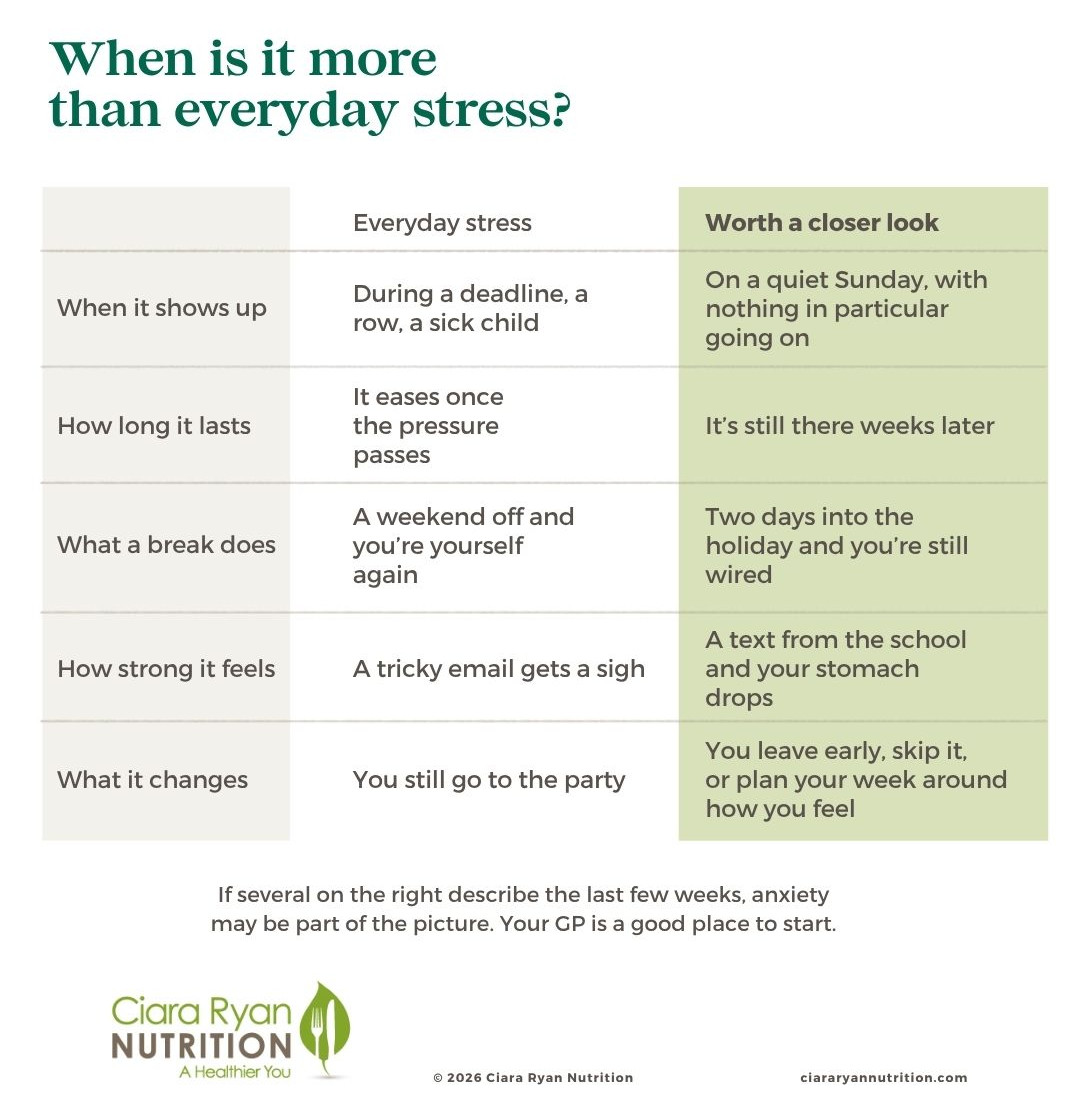
When is it more than everyday stress?
Everyone feels stretched or overwhelmed at times. A deadline, a sick child or a week when nothing goes to plan can leave your body on high alert. Often, these feelings ease as the pressure passes and you have an opportunity to recover. But sometimes the on-edge feeling persists, seems out of proportion to what is happening, or begins to affect everyday life.
It may be worth paying closer attention if:
You feel on edge even during relatively calm periods.
The feeling has persisted for weeks rather than a few difficult days.
Rest or time away does not seem to help.
Your physical reaction feels much stronger than the situation warrants.
You have started avoiding situations or changing your routine because of how you feel.
If several of these feel familiar, anxiety may be contributing to how you feel. Recognising the pattern can make the symptoms feel less mysterious and help you decide what support you may need.
One important note. New or unexplained chest pain or heart-racing symptoms should always be checked by your GP. Anxiety can cause these sensations, but other possible causes need to be ruled out.
Can anxiety cause stomach problems?
It can. Your gut and your brain are in constant contact through your nervous system, so when you’re anxious, your gut feels it: butterflies, nausea, cramping, or a sudden need for the toilet. For people who feel anxious a lot of the time, those symptoms can become part of everyday life.
Think of the nerves before a driving test. Your stomach turns and you’re suddenly scanning for a toilet. That’s the gut-brain connection at work, and it runs both ways. An unsettled gut can increase anxiety and apprehension.
People with IBS often feel that loop strongly. Before agreeing to a night out or a walk with friends, you might be thinking about the route, what you’ll eat and where the nearest toilet is. That apprehension makes the gut symptoms worse, and the symptoms feed the apprehension.
Anxiety can aggravate IBS, but it is not the whole explanation for it. When symptoms flare, it’s easy to blame the last meal and begin removing more and more foods. Sometimes food is relevant, but sleep, stress, changes in routine and other factors may also be contributing.
What can make anxiety worse?
Anxiety is complex and rarely has one simple cause. You can feel anxious even when you eat well, sleep reasonably and take good care of yourself, and it’s not always obvious where the feeling is coming from. However, alcohol, caffeine and going too long without food are three everyday factors I often see turning up the volume on symptoms such as shakiness, restlessness, a racing heart or disturbed sleep. They may not explain the anxiety, but noticing how they affect you can provide a practical place to start.
Alcohol and “the fear”
A few drinks can feel like they help in the moment. You loosen up, the chat comes easier, and whatever was bothering you feels a bit further away. The next morning is a different story. As the alcohol wears off, anxiety can come back stronger, and the broken sleep adds to it. Restless, shaky, replaying everything you said the night before: the fear, as we call it in Ireland. Some people call it hangxiety.
For some people it doesn’t take much. Two glasses of wine with dinner can be enough. Next time you’ve had a drink, check how you feel at eleven the next morning, and compare it with a morning after a night without. If there’s a difference, then cutting back is a simple step in the right direction.
Caffeine: when the pick-me-up keeps you on edge
Caffeine can produce sensations that overlap with anxiety, including a faster heartbeat, shakiness and restlessness. Sensitivity varies considerably: some people notice an effect after one cup, while others tolerate more without difficulty. The amount of caffeine also varies widely. A large filter coffee or a café drink containing two or more espresso shots may provide considerably more caffeine than a standard single-shot coffee. Strong tea, energy drinks and some pre-workout products also contribute.
If you think caffeine may be intensifying your symptoms, try reducing it gradually rather than stopping suddenly, which can cause headaches and irritability. Swapping one cup, particularly an afternoon coffee, for decaf can be an easy place to start. There is no need to avoid caffeine automatically if it does not appear to affect you.
Going too long without eating
Breakfast skipped, lunch at your desk at 3pm, or holding off until your eating window opens. Long gaps without food can leave some people irritable, light-headed or shaky, sensations that can overlap with anxiety. That doesn’t necessarily mean your blood glucose is abnormally low, but it can make an already unsettled day harder to manage.
If that shaky, on-edge feeling hits in the afternoon, check when you last ate. A coffee and a slice of toast in the car may not carry you through to lunch. Adding some protein can make breakfast more sustaining: eggs on toast, Greek yoghurt with berries and nuts, or porridge with seeds or nut butter. If fasting regularly leaves you feeling on edge, it would be reasonable to adjust your eating window rather than push through.

When they stack up
These factors can also feed into one another. You sleep badly after a few drinks, so you need an extra coffee to get going. Breakfast gets skipped because you’re running late. By the afternoon you’re shaky and on edge, by the evening you’re exhausted but wired, and the wine helps you unwind. Then you’re awake at 3am with your mind racing, and the whole thing starts again.
Can perimenopause cause anxiety?
Anxiety can emerge or become more noticeable during perimenopause, sometimes before hot flushes or obvious changes to the menstrual cycle. I hear it in clinic all the time. A woman who has always been steady, the one everyone else leans on, suddenly finds herself on edge in situations she’d have handled without thinking. Less confident at work. Lying awake at night. Wondering what on earth is wrong with her.
Shifting hormones play a big part. During perimenopause, changing patterns of oestrogen and progesterone can certainly influence mood, sleep and how the brain responds to stress. Progesterone, which has a calming effect on the brain, can be lower or less reliable, and that dip, for some women, can unsettle your mood and bring on anxiety.
Broken sleep, night sweats and the sheer load of this stage of life (teenagers, ageing parents, a busy job) all add to it. Plenty of women notice alcohol hits differently now too. The glass of wine that used to help them unwind leaves them more anxious the next day than it ever did.
If anxiety is new, persistent or affecting your daily life, it deserves a place in the conversation with your GP, even if you are not experiencing hot flushes. Before the appointment, it may help to note when the symptoms occur, how you are sleeping and whether you have noticed any changes in your cycle or other perimenopausal symptoms.

How can you reduce anxiety naturally?
You can’t control everything life throws at you, but you can make your body an easier place to be while you deal with it. There is no single strategy that works for everyone, but slow breathing, regular meals, movement and protecting your sleep are useful places to start. It may also help to notice whether caffeine or alcohol turns up the volume on your symptoms.
What to look at first
Pick one of the patterns you recognised and change that one thing for a fortnight. Capture a line in the notes on your phone each evening to track it: how wired you felt, how you slept, what you ate and drank. Patterns that are invisible day to day tend to jump out once they’re written down. Trying to change everything at once usually means none of it sticks, and small, steady changes are the ones that last.
Go easy on yourself while you do it. If you’re getting through a hard stretch, a missed breakfast or an extra coffee tells you something about the week you’re having. Let it go and pick it up again tomorrow.
A few practical places to start
Slow your breathing. When anxiety makes your breathing faster or shallower, deliberately slowing it may help your body begin to settle. Try breathing in gently for a count of four and out for a count of six for a few minutes. Don’t worry about getting the numbers perfect, the aim is simply to breathe slowly and comfortably, with a slightly longer out-breath. It sounds too simple to work, which is why most people never try it. Then they do, and they’re surprised.
Look after the basics. Regular meals, some daily movement and a consistent sleep routine will not remove the reasons you feel anxious, but they can support your body while you deal with them. A short walk, a regular bedtime or charging your phone away from the bed may sound simple, but simple does not mean insignificant. Choose the step that feels most manageable rather than trying to change everything at once. You’ve heard all of these before, which makes them easy to dismiss. Each one helps a nervous system that’s been running on stress for too long.

Where to go from here
People can live with this wired, on-edge feeling for a long time without recognising it as anxiety. The clenched jaw, racing heart on a quiet evening or 3am wake-up gradually becomes part of everyday life, especially when there is no obvious worry attached.
People rarely come to see me specifically about anxiety. They may be looking for support with digestive symptoms, low energy, perimenopause, a diagnosed medical condition or simply because they no longer feel like themselves. As we begin to look at the full picture, that sense of being constantly on alert often appears alongside the original concern.
Food and lifestyle are not a cure for anxiety, but they can be an important part of the wider picture. Together, we can look at whether meal patterns, digestive symptoms, sleep, caffeine, alcohol or the demands of daily life may be adding to how you feel. The aim is not to find something else to blame or to give you a long list of rules. It is to help you understand your own patterns and identify realistic changes that support both your physical and emotional wellbeing.
If you would like help exploring how nutrition and lifestyle fit into your wider health picture, you can find out more about working with me here.
You don’t need to know the cause before you ask for help. If anxiety is taking up more of your day, start with your GP. Nutrition works best alongside medical or psychological care, not instead of it. Aware’s freephone line, 1800 80 48 48, is there too.

Further Reading section
Struggling with Fatgiue and Weight Fluctuations? Discover How Your Thyroid Might Be the Key The other reason your heart might be racing: how your thyroid works, and when it's worth getting checked.
For anyone who's cut out food after food and still has a gut that won't settle.
Read about what months of running on stress do to your body.
FAQ
What is somatic anxiety?
Somatic anxiety is anxiety you feel mostly in your body, rather than as worrying thoughts. It can show up as muscle tension, a racing heart, a churning stomach, shallow breathing or trouble sleeping. Many people with somatic anxiety don’t recognise it as anxiety at all, because they don’t feel worried. They just feel wired, on edge or unable to switch off.
Why is my anxiety worse in the morning?
Your body releases more cortisol, one of its stress hormones, in the first hour or so after you wake. That rise is normal, and it’s part of what gets you up and moving. If your stress response is already running high, the same rise can leave you on edge before your feet hit the floor. Alcohol the night before, broken sleep and coffee on an empty stomach can all add to it. If mornings are your worst time of day, try eating breakfast before your first coffee.
Can anxiety cause chest pain?
Anxiety can cause chest tightness, a racing heart and a feeling of not getting a full breath. Chest pain can also have other causes that need to be ruled out, so any new or unexplained chest pain should be checked by a doctor. If the pain is severe, or comes with breathlessness, sweating or pain spreading to your arm or jaw, call 112 or 999 straight away.
Can coffee make anxiety worse?
For many people, yes. Caffeine stimulates the same stress response involved in anxiety, so it can bring on a racing heart, shakiness and restlessness. Sensitivity varies, and some people notice it after a single cup. Tea, energy drinks and pre-workout products contain caffeine too. If you’re feeling on edge, cut back a cup at a time. Stopping overnight can bring on headaches.
Why do I feel anxious after drinking alcohol?
Alcohol can feel calming at the time, but as it wears off, anxiety can feel stronger than before. Alcohol also breaks up your sleep, which adds to that unsettled feeling the next day. In Ireland we call it “the fear”. If your most anxious mornings tend to follow an evening of drinking, that pattern is worth paying attention to.
About the Author
Ciara Ryan (DipNT, mNTOI) is a Nutritional Therapist based in Drogheda, specialising in metabolic health, digestive health, and supporting women through perimenopause. She has over a decade of clinical experience and also delivers workplace wellbeing seminars for organisations across Ireland. Read more about Ciara.


Comments