


The Bliss Point: Why Some Foods Are So Difficult to Stop Eating


How hyper-palatable, ultra-processed foods influence appetite, reward and our desire to keep eating
You open a packet of crisps intending to have just a few. You are not especially hungry and may already have eaten your dinner. But one crisp becomes another, your hand keeps returning to the packet and, before you realise it, the packet is empty.
Or perhaps it is chocolate after a difficult day, biscuits with a cup of tea or the grazing box bought for the kids' lunches that somehow empties before lunches happen. You know you have eaten enough, yet there is still a clear sense that you could eat something else.
I have certainly been there, and perhaps this sounds familiar to you too. It does not mean that you are greedy, weak or lacking discipline. It means that you are human, living in a food environment filled with products that are exceptionally easy to eat, intensely rewarding and available almost everywhere.
Ireland now has one of the highest shares of ultra-processed food in any European shopping basket, close to 46 per cent, third only to Britain and Germany. That is not a personal failing playing out in millions of kitchens. It is food built, tested and packaged to be difficult to stop eating. This article looks at what happens between the packet and the craving: the reward system behind it, the marketing history that primed us for it, and the changes that work once this stops being treated as a discipline problem.
Certain foods make stopping feel much more difficult than starting, and that is not entirely accidental.
"Once you pop, you can't stop"
Many of the advertising messages we grew up with captured this experience particularly well.
"Once you pop, you can't stop" openly acknowledged that one Pringle was likely to lead to another. "Have a break, have a KitKat" connected chocolate with rest, relief and permission to pause, while "A Mars a day helps you work, rest and play" presented a chocolate bar as a source of energy and restoration.
Then there were the famous Flake adverts. You may remember the woman in the bath and the slow, sensory imagery accompanying the words "Only the crumbliest, flakiest chocolate…" The product was not simply being sold as food; it was being sold as a private moment of indulgence, escape and reward.
Long before most of us had heard of dopamine or reward pathways, we were learning to associate particular foods with comfort, energy, rest, pleasure and something deserved at the end of a difficult day.
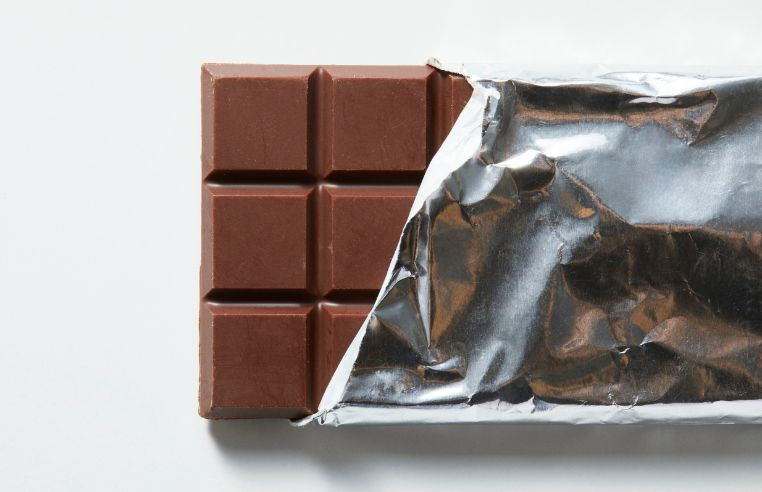
Processed, ultra-processed and hyper-palatable are not the same thing
Processing itself is not inherently harmful. Frozen vegetables, tinned beans, oats, tinned fish and pasteurised milk have all undergone some form of processing. Processing can improve food safety, convenience, affordability and shelf life.
Ultra-processed foods, or UPFs, are generally industrial formulations made largely from refined ingredients and substances not commonly used in a home kitchen. They may contain flavourings, colours, emulsifiers, sweeteners, modified starches and other additives used to alter their taste, texture, appearance or shelf life.
The category includes obvious examples such as sweets, fizzy drinks and many packaged snack foods. However, it is a broad classification, and not every UPF has the same nutritional value or the same effect on appetite.
"Hyper-palatable" describes something slightly different. It refers to foods containing particular combinations of fat, sugar, refined carbohydrate and salt that make them unusually rewarding to eat.
Common combinations include:
Fat and sugar, as found in chocolate, ice cream, cakes, pastries and biscuits
Fat and salt, as found in crisps, pizza, chips, burgers and sausage rolls
Refined carbohydrate and salt, as found in tortilla chips, savoury crackers, breadsticks and some baked snack foods
In nutrition circles, this gets shorthanded as the "two out of three" rule: combine any two of fat, sugar and salt, and you've got a pairing the brain finds hard to stop eating. The scientific definitions are more precise, but this simple explanation helps us understand why chocolate can be more difficult to stop eating than a spoonful of sugar, and why crisps can be more compelling than a plain boiled potato.
Some foods are both ultra-processed and hyper-palatable. It is often the overlap between intense palatability, convenience, concentrated energy and an easy-to-eat texture that makes them particularly easy to overconsume.

The Bliss Point Is How These Foods Don't Taste This Good by Accident
Food manufacturers want us to enjoy their products and buy them again and again. That part is simple. What food scientists call the bliss point, the exact concentration of fat, sugar and salt tested until it hits maximum reward, is how they get there. The sweetness, saltiness, fat content, flavour, aroma, shape, texture and even the sound of the bite can all be carefully tested and refined.
The appeal is not only in the ingredients; it is in the whole sensory experience. A chocolate-coated biscuit combines snap, crunch and melt. A tortilla chip delivers intense seasoning and crispness from the first bite. Ice cream combines sweetness and fat with a smooth texture that requires little chewing. Layers, coatings, fillings and contrasting textures maintain our interest from one bite to the next.
Many of these foods can also be eaten quickly. Eating rate matters because it influences how much food we can consume before the body has had sufficient time to register what has been eaten and generate a sense of fullness.
Packaging plays a part too. Large bags, sharing packs, multipacks and resealable packets can influence how much we eat. A packet labelled "sharing" does not provide a biological signal telling us when our share is finished.
Some people feel that they should be able to sit beside an open sharing bag and simply decide to stop eating. When they find that difficult, they interpret it as evidence that they lack willpower.
But what they are asking themselves to do is repeatedly resist a highly rewarding food that is open, visible, within reach and extremely easy to eat.

Why we can want food when we are not hungry
Eating is governed by more than physical hunger. Alongside the system that manages the body's energy needs, a reward system motivates us to seek out foods we've learned are valuable. The two overlap, but they aren't the same thing.
Dopamine sits at the centre of that reward system, though it's often oversimplified as the "pleasure chemical." Its real job is wanting: the anticipation of a reward and the pull to seek it again, which isn't the same as liking it once you have it. You can spend an afternoon thinking about chocolate, feel drawn to it in the shop, and still find the eating itself less satisfying than expected. "The strange thing is, I don't even enjoy it that much," is a phrase I hear often.
That gap between wanting and liking is close to what's become known online as food noise: a persistent hum of thinking about food that has little to do with hunger. Much of that conversation now centres on GLP-1 medication, which many people report genuinely quietens it. What's underneath is the same wanting system, running loud, and it runs on cues, which is where the pattern becomes something you can work with directly, medicated or not.
That's because the reward system is also a learning system. A food that reliably delivers comfort gets tied to whatever came before it: making tea, the sofa, 3pm at work, simply seeing the packet in the cupboard.
Cue → anticipation → eating → short-term relief → a stronger association
Eventually, making tea can feel incomplete without a biscuit. The craving seems to come from nowhere, but it's a learned sequence, which also means it can change once you notice the cue driving it.

When food makes everything feel quiet
Sometimes a rewarding food is providing much more than taste.
One client described eating as the point at which everything went quiet. She did not believe she was physically hungry; what she wanted was the brief sense of calm and relief she experienced while eating.
That distinction mattered. Simply telling her to stop buying the food would have ignored the job it was doing. We first needed to understand what happened before the eating, what she experienced during it and why that particular point in the day felt so difficult.
Food was providing a transition from pressure to relief. It was a way to switch off, experience something pleasant and create a temporary distance from stress and overwhelm.
This does not necessarily mean that food is correcting a neurotransmitter deficiency or producing lasting calm. The effect is more complex. Taste and reward are involved, but so are distraction, habit, expectation and learned associations.
If food repeatedly provides comfort during stress, the brain learns: This helps me feel better. Remember it for next time.
Food did not need to become forbidden for this client, but it could no longer be the only way she had to regulate how she was feeling. We worked on widening the range of options available to her while also ensuring that she was eating enough during the day.
We cannot always address emotionally driven eating through nutrition alone. However, inadequate meals, long gaps without food and physical exhaustion can make the pull towards a highly rewarding food considerably stronger.
What about hunger and fullness hormones?
Appetite runs on a two-way conversation between the gut, brain and body. Ghrelin, the hunger hormone, rises before a meal. Leptin and GLP-1 signal that you've had enough. You've probably heard of GLP-1 through medications like Ozempic and Wegovy, but it's a hormone your gut makes naturally too.
It's tempting to say ultra-processed foods simply switch these hormones off, but the science isn't that clean; responses vary by food and by person. What we can say is that many hyper-palatable UPFs make it easier to eat past fullness: energy-dense, quick to eat, and short on the protein and fibre that would normally slow you down.
For some women, this shifts again around perimenopause. A craving that never used to show up at 4pm, or one that hits harder than it used to, isn't imagined; the hormones behind hunger and fullness change with it.
The signal that you're full may still be firing. It's just outmatched, competing against taste, convenience, habit and reward pulling the other way, which is why clients often tell me, "I know I'm full, but I still want something." Fullness and the desire to keep eating are related, but they aren't always the same thing.
What happened when researchers controlled the food?
In an important controlled study, 20 adults stayed in an inpatient research unit and were given an ultra-processed diet for two weeks and a minimally processed diet for two weeks, in random order. The meals presented were designed to be matched for calories, macronutrients, sugar, sodium and fibre, and participants could eat as much or as little as they wished.
During the ultra-processed phase, participants ate approximately 500 additional calories per day and gained an average of 0.9 kg. During the minimally processed phase, the same people lost approximately 0.9 kg. They also ate the ultra-processed foods more quickly.
This was a small and relatively short study. It does not tell us that dopamine, one ingredient or a particular appetite hormone caused the difference, and it does not prove that every UPF will make every person overeat. It does, however, demonstrate that food structure and formulation can influence how much we consume.

Are these foods addictive?
Some people experience intense cravings and repeated, unsuccessful attempts to cut back, and that experience is real. Whether it counts as "addiction" is still scientifically debated — food is essential, and occasionally overeating chocolate doesn't make someone an addict. It may be more accurate to say certain foods produce addiction-like patterns in some people, especially where reward, habit, stress and constant availability reinforce each other.
Either way, the more useful question isn't "What is wrong with me?" It's "What is making this pattern so easy to repeat, and what might make it easier to change?"
"Just stop buying it" is rarely the whole answer
Ultra-processed foods aren't only about formulation and advertising — they're also affordable, portable and convenient, which matters when you're working long hours, feeding a family, or just low on energy. Cooking everything from scratch isn't realistic for most people, and it doesn't need to be: frozen vegetables, tinned pulses and a well-chosen ready meal can still improve a convenient meal rather than replace it. Reading the ingredients list rather than the front-of-pack claims helps more than most swaps, and Food Labels Decoded explains how.
The aim isn't to sort every food into good or bad. It's to understand which foods work for you, and which circumstances make them harder to manage.
What actually helps?
Once we understand the pattern, we can stop expecting willpower to do all the work. Pick one strategy below that fits the moment you're in, not all of them.
Eat regular, satisfying meals. Including protein, fibre, vegetables or fruit and an appropriate source of carbohydrate can make meals more satisfying and reduce the likelihood of encountering a highly rewarding food when ravenously hungry.
Create a portion and a pause. Putting food into a bowl introduces a natural stopping point without making it forbidden. You can choose to have more, but the pause gives your brain time to register that decision.
Notice the cue. Is the urge connected to physical hunger, making tea, stress, tiredness, boredom, television or simply seeing the food? Naming the cue creates a small gap in what may have become an automatic sequence, room enough to choose something else if you want to, or to eat the food and know why.
Keep pleasure in the plan. Meals that are technically nutritious but bland and unsatisfying are unlikely to compete well with intensely flavoured snack foods. Nourishing food also needs to taste good and leave us feeling satisfied. Medjool dates with chocolate and peanut butter is the kind of thing I mean: a real fat-and-sugar pairing that still nourishes.
Adjust the environment when you can. Keep useful foods visible and easy to access, and move highly cue-triggering foods away from the sofa or desk when that's within your control. In a house where you are not the only one shopping or snacking, this will only go so far, and that is not a failure on your part.
Look at the need beneath the food. If food is reliably providing comfort, relief or decompression, removing it without adding another form of support leaves a gap. Any alternative needs to be realistic and readily available when it is needed.
Respond with curiosity. After eating more than intended, ask: What time was it? When had I last eaten? What was I feeling? What was happening around me? What did the food provide at that moment? That information is far more useful than criticism: it tells you whether the fix is an earlier meal, a different cue, or simply naming what happened without judgment.

Understanding changes the conversation
Certain foods are easy to overeat because so many influences arrive at once, and we're not meeting them on a level playing field. That doesn't make them irresistible.
In clinic, I rarely find the answer is simply "stop buying biscuits" or "use more willpower." We look at when the eating happens, how satisfying meals are, which cues are involved, and what the food may be providing at that moment. For one person, that's eating more satisfying meals. For another, it's recognising that chocolate has become the only reliable way to switch off. The Crush Your Cravings ebook walks through several of these starting points if you want to work through it yourself; for anything that needs more than a starting point, it's the kind of thing we work through together in 1:1 sessions.
If you recognise yourself in the empty packet, the evening chocolate habit or the feeling of being physically full but still wanting more, your experience makes sense.
You may not need harsher rules or another restrictive diet. You may need a better understanding of the biological, emotional and practical factors influencing your eating.
My role is to help people make sense of those influences and develop a way of eating that is nourishing, satisfying and workable in real life.
Meaningful change often begins when we stop asking, "Why can't I control myself?" and begin asking, "What is driving this pattern, and what would help me change it?"
Further reading
Ultra-Processed Foods: How to Satisfy Cravings Without Guilt — the practical, day-to-day companion to this piece.
Crush Your Cravings, free in the Resource Library — sign in or join free to get it.
Visceral Fat: What Belly Fat Is Telling You — what's at stake longer-term, including the same perimenopause thread that runs through this piece.


Comments